

How to Get Your First Tech Job With No Experience
You studied. You took courses, joined a bootcamp, built projects, maybe even did an internship. Then you hit the job market and nearly every listing asks for two years on the job. So what do you do in the meantime? Waiting is not an option.
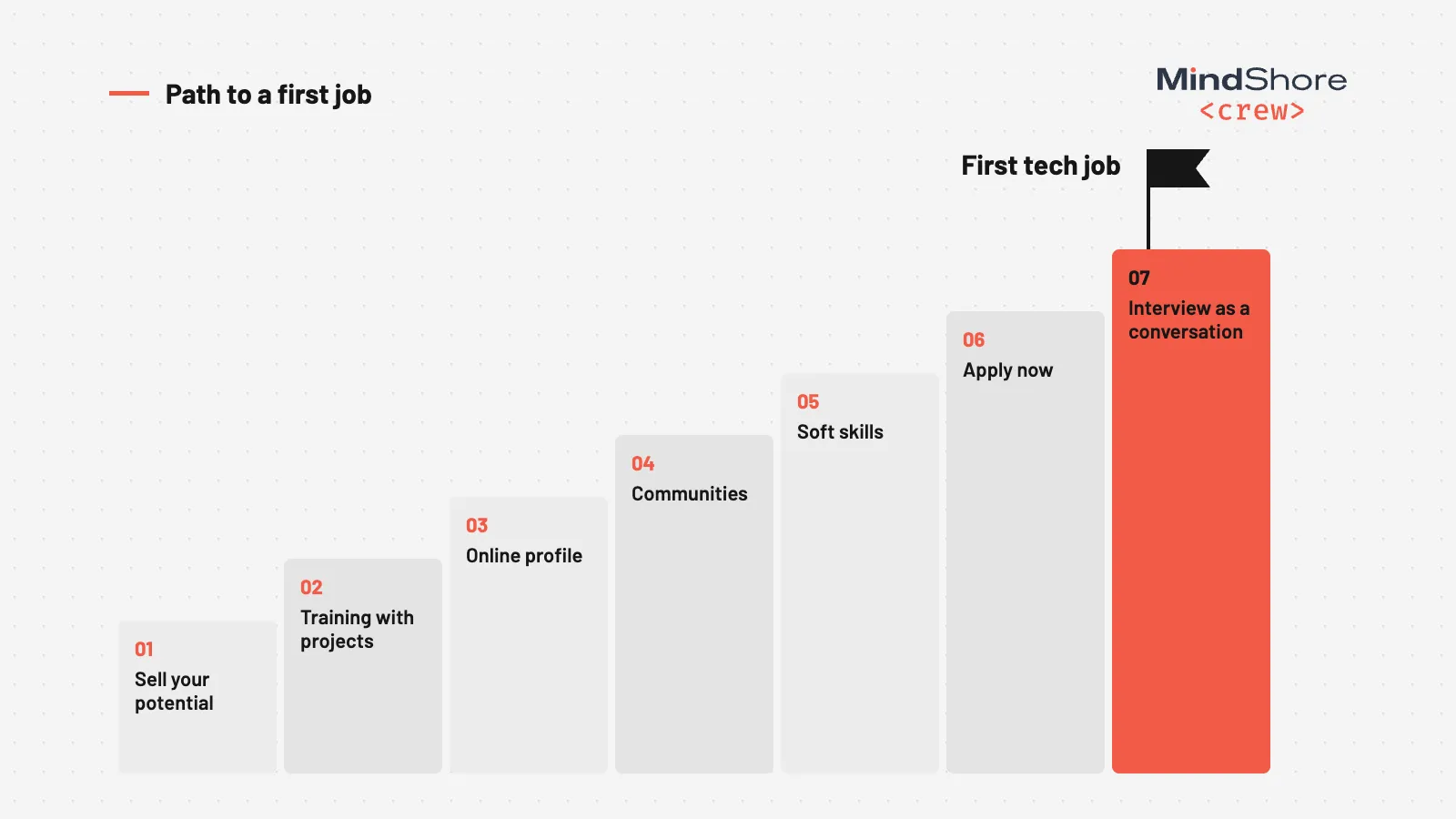
Training is essential, but even with a solid base, your first hiring process can feel daunting. That is especially true when you feel something is missing because you haven’t worked in the industry yet. Keep this in mind: plenty of companies are looking for people with drive, a good attitude, and the ability to learn fast and contribute from day one.
Sell your potential, not your work history
If you spend half the interview apologizing for what you haven’t done yet, you rule yourself out before it starts. Don’t pretend to be someone you’re not, but make visible what you can already put into practice. Teams need people who adapt, communicate clearly, stay calm when something breaks and pick things up quickly. Much of that gets built before the first job.
Have you built a project on your own? Joined forums, online challenges or a bootcamp? Do you have a GitHub, LinkedIn or portfolio that shows what you’ve learned? That is your edge: what you did without anyone asking.
Training matters, but not for the certificate
A solid course with a real project behind it beats a long list of certificates with nothing to show. Document the journey: push your code to GitHub, share screenshots and write about your progress. Something like: “Today I connected to an API for the first time, after three days of fighting with it. It finally works.” A post like that says more about you than any attendance certificate.
Your online profile is your cover letter
Recruiters look beyond the traditional résumé. Make sure your LinkedIn makes clear what you’re after, with a direct headline such as “Web developer in training, JavaScript.” Share what you’re learning, comment on posts and join the conversation. You don’t need to be a social media star, but people should see that you’re active.
A portfolio, blog or YouTube channel helps even more. It shows that you haven’t worked in the field yet, but you’re clearly moving.
Get out there, even if it’s online
Communities, events and forums are the best way into the industry: Discord, Slack, GitHub, LinkedIn, Dev.to. Join a meetup, sign up for a webinar or enter a Telegram group about what you’re studying.
You may feel shy at first, but after a couple of times you stop watching from the sidelines and become part of it. And if you share what you discover, even in short posts, you build a name as someone in the tech world, not just someone looking for work. That leads to contacts, fresh ideas and real opportunities.
Build your soft skills
Writing good code is only half of it. Communicating, collaborating, staying organized and sticking with a project when it goes sideways matter just as much, particularly on remote, agile and diverse teams, which is most of them.
If you can ask for help, give feedback and adapt to new settings, you’re earning points before you walk into an office. Let it show in your interviews, your posts and the way you describe your work.
Don’t wait until you feel ready
When will you feel completely prepared? Never. Apply to open roles even if you don’t tick every box, because almost nobody does.
And if no one calls back, don’t get discouraged. Keep learning, sharing your work and connecting with people in the field. Sometimes an interview comes from a post, not a résumé.
Treat interviews as conversations, not exams
Tell your story: why you made the switch, what you’ve learned, what you want next. Be yourself. Then get ready:
- Practice technical interviews.
- Try interview simulators.
- Solve coding challenges.
Don’t obsess over getting every answer right. Interviewers aren’t looking for a robot, they want someone they’d enjoy working with. If you don’t know something, say so, and add: “I haven’t seen that yet, but I can learn it.” Admitting your limits is a strength too.
With a good attitude, purposeful training, visible work, connections in the industry and a story you can tell, the missing years of experience fade into the background. What people will see is what you’re building through effort and drive. That is where everything starts.